
By Harry | Goodfellow Locksmith Denver | 15+ Years of Hands-On Locksmith Experience
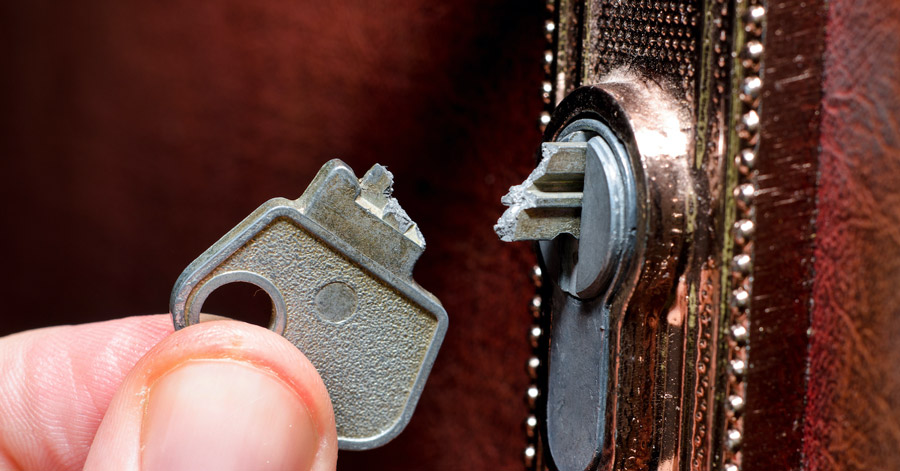
A broken key stuck inside a lock can be stressful, especially when part of the key disappears into the cylinder and you are not sure whether pulling, twisting, or forcing it will make the situation worse.
After more than 15 years of hands-on locksmith work, one of the first things I tell customers is simple:
Do not keep turning or forcing a broken key once it becomes stuck.
Sometimes a broken key can be removed fairly easily. Other times, the fragment is too deep inside the cylinder, the lock is under pressure, or the key has broken inside a more complex mechanism.
The goal is not simply to pull the key out. The goal is to remove it without damaging the lock that still has to work afterward.
Harry’s Quick Answer: What Should You Do When a Key Breaks in a Lock?
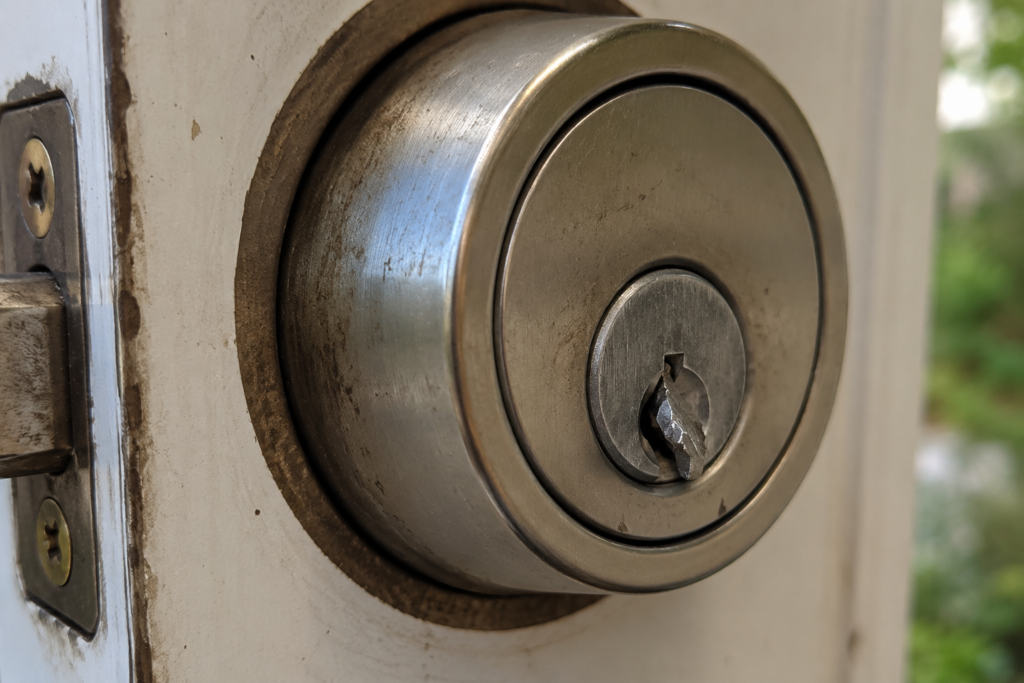
If a key breaks inside the lock, start by looking at how much of the broken piece is still visible.
If part of the key is clearly protruding from the keyway and the lock is not under pressure, you may be able to carefully grip the exposed piece.
If the key is broken off completely inside the cylinder, however, I recommend being much more cautious.
Avoid repeatedly pushing tools into the keyway because you can drive the broken fragment deeper into the lock or damage internal components.
Harry’s Take
If I can see part of the key sticking out, that is very different from a fragment that has broken deep inside the cylinder. The farther the key is pushed inside, the greater the risk of damaging the lock while trying to remove it.
Why Do Keys Break Inside Locks?
Keys rarely break for no reason.
A break often happens because the key or lock has already been giving warning signs.
Common causes include:
- a worn or weakened key;
- a bent key;
- repeatedly forcing a stiff lock;
- a key that has developed a small crack;
- a dirty or worn lock cylinder;
- door alignment putting pressure on the lock;
- turning the key before it is fully inserted; or
- using excessive force when the lock does not turn normally.
If a key has become difficult to turn over time, I would rather investigate why the lock is resisting before the key finally snaps.
Can You Remove a Broken Key With Pliers?
Sometimes — but only when there is enough of the broken key exposed to grip safely.
If the broken portion is clearly sticking out of the lock, a small pair of needle-nose pliers may be able to grip the exposed edge.
The key should be pulled gently and straight outward.
If you cannot get a secure grip, stop rather than repeatedly squeezing, twisting, or pushing against the keyway.
Pliers are not useful when the key fragment is completely recessed inside the cylinder.
Trying to reach deeply into the lock with oversized tools can damage the keyway and make professional extraction more difficult.
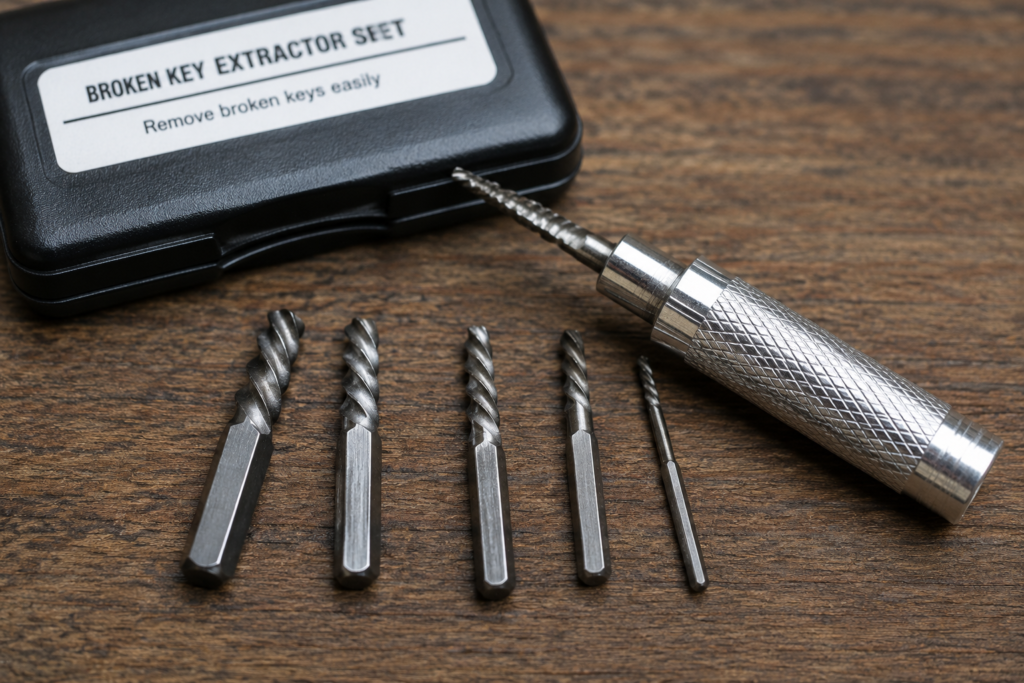
What Is a Broken-Key Extractor?
Locksmiths use specialized broken-key extraction tools designed to reach and manipulate key fragments inside lock cylinders.
The exact tool and method depend on:
- how deeply the key is lodged;
- the shape of the broken edge;
- the type of cylinder;
- whether the cylinder has been rotated;
- the condition of the lock; and
- whether another mechanical problem caused the key to break.
Consumer key-extractor tools are also sold online and in some hardware stores, but buying the tool does not automatically mean every broken key should be treated the same way.
If the fragment is deeply lodged, difficult to see, or not moving easily, forcing an extractor into the keyway can make the situation worse.
What I Don’t Recommend Doing
The fastest way to turn a broken-key problem into a damaged-lock problem is to keep experimenting after the fragment stops moving.
I recommend avoiding:
- forcing screwdrivers into the keyway;
- hammering the broken key;
- pushing the fragment farther into the cylinder;
- using excessive glue around the lock;
- drilling the lock without understanding the hardware;
- aggressively twisting the cylinder; or
- continuing to force a lock that was already difficult to operate.
Some techniques shown online may look simple, but locks differ considerably.
What works on one basic residential cylinder may be completely inappropriate for a smart lock, high-security cylinder, automotive ignition, mortise lock, multipoint lock, antique lock, or another specialty mechanism.
Specialty Locks Require More Care
Broken-key extraction can become more complicated when the key is stuck inside specialty or premium hardware.
Harry works with a wide range of difficult and unusual lock systems, including:
- multipoint locking systems;
- mortise locks;
- Baldwin and premium architectural hardware;
- antique and vintage locks;
- French-door and patio-door locking systems;
- high-security cylinders; and
- rare or hard-to-find lock mechanisms.
With these locks, the key fragment is only part of the problem.
The cylinder, internal mechanism, door alignment, and replacement-parts availability may all need to be considered before any extraction or repair is attempted.
For more information, visit Goodfellow’s specialty lock services in Denver.
When the Lock Is Unusual, Don’t Treat It Like a Basic Deadbolt
A broken key inside a multipoint, mortise, antique, premium, or rare lock may require a different approach. Harry specializes in diagnosing difficult lock systems and looking for a repairable solution before unnecessary replacement.
Why Did the Key Break in the First Place?
This is the question I think gets overlooked most often.
Removing the broken piece may solve the immediate problem, but it does not necessarily solve the reason the key failed.
Once the fragment is removed, I look at things such as:
- whether the lock turns smoothly;
- whether the key was badly worn;
- whether the cylinder is damaged;
- whether the door is putting pressure on the lock;
- whether the latch and strike plate are aligned; and
- whether repair, adjustment, rekeying, or replacement makes the most sense.
If the lock has been difficult to operate, our guide on what causes a stuck door latch also explains how door alignment and worn hardware can create symptoms that may look like a lock problem.
Can You Make a New Key From the Broken Key?
In some situations, the broken pieces can provide useful information for making or replacing the key.
Whether that is possible depends on the key, lock, and condition of the pieces.
If you recover both parts of the key, keep them.
Do not throw the broken pieces away before the lock or key situation has been evaluated.
For vehicle keys, the process can be significantly different because modern automotive keys may involve transponders, electronic programming, or key-fob systems.
You can learn more about Goodfellow’s automotive locksmith services in Denver.
What If the Broken Key Is in a Car Ignition?
A broken key inside an automotive ignition should be treated differently from a standard residential door lock.
Avoid forcing the ignition or repeatedly inserting tools around the broken key.
Automotive ignition components can be more expensive to repair or replace than an ordinary residential cylinder.
When requesting service, provide:
- the vehicle year;
- make;
- model;
- your location;
- whether the key broke in the ignition or door; and
- whether you have another working key.
What If the Broken Key Is in Your Front Door?
Residential broken-key situations are often connected to more than just the key.
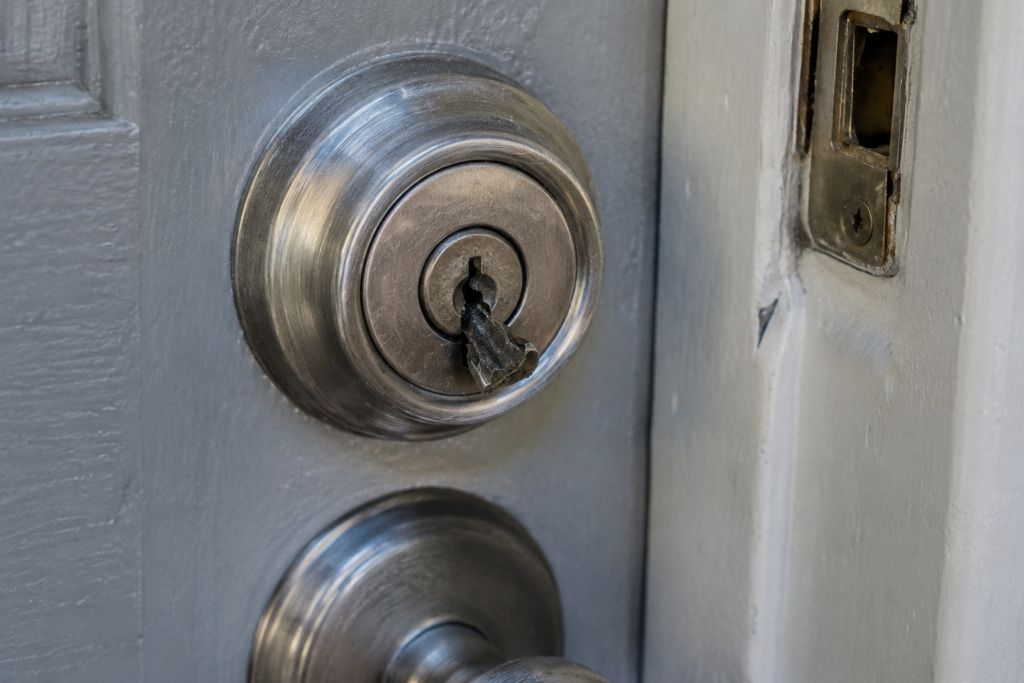
If the deadbolt or lock had already become difficult to operate, the door may also need to be checked for alignment, worn hardware, or cylinder problems.
Goodfellow provides residential locksmith services in Denver for broken keys, lock repair, rekeying, lock replacement, smart locks, and other residential door-hardware issues.
How Can You Prevent a Key From Breaking Again?
Replace Worn Keys
If your key is visibly bent, cracked, heavily worn, or beginning to twist, replace it before it fails completely.
Don’t Force a Stiff Lock
A key should not require excessive force during normal use.
If the lock has become noticeably harder to turn, have the lock and door checked rather than simply turning the key harder.
Pay Attention to Door Alignment
Sometimes people assume the lock is stiff when the real problem is pressure from the door against the latch or deadbolt.
If pushing, pulling, or lifting the door changes how easily the key turns, alignment may be contributing to the problem.
Use a Good Spare Key
Keep a properly cut spare rather than waiting until your only key is heavily worn.
When Should You Call a Locksmith for a Broken Key?
Consider professional help when:
- the broken key is completely inside the lock;
- you cannot safely grip the fragment;
- the key has been pushed deeper into the cylinder;
- the lock no longer turns normally;
- the broken key is inside an automotive ignition;
- the lock is high-security, smart, specialty, antique, mortise, or multipoint hardware;
- the cylinder appears damaged; or
- you are concerned that continuing may damage the lock.
If you also need urgent access, you can learn more about emergency locksmith service in Denver.
No Dispatcher. No Middleman. Speak Directly With Harry.
When you contact Goodfellow Locksmith, you’re not being passed through a national call center, anonymous dispatch network, or third-party locksmith company.
You communicate directly with Harry.
If your key has broken, tell Harry:
- where the key broke;
- whether any part of it is still visible;
- the type of lock, vehicle, or specialty hardware involved;
- whether the lock was already difficult to operate; and
- whether you can send a clear photo of the lock.
Direct Local Locksmith Service
15+ Years of Hands-On Experience
Residential, Commercial, Automotive & Specialty Locks
No National Dispatch Center
No Third-Party Locksmith Network
No Middleman
Speak directly with Harry about your broken key or lock problem.
Frequently Asked Questions About Broken Keys
Can I pull a broken key out with pliers?
If enough of the broken key is exposed to grip safely, small needle-nose pliers may work. Do not force the tool deep into the keyway if the fragment is recessed inside the lock.
What if the broken key is completely inside the lock?
A deeply lodged fragment may require a broken-key extraction tool and careful access to the keyway. Repeatedly pushing tools into the lock can drive the fragment farther inside.
Can a locksmith remove a broken key without replacing the lock?
Often, yes. Whether the lock can remain in service depends on the condition of the cylinder, the position of the broken key, and whether the lock itself was damaged.
Can you remove a broken key from a specialty lock?
Often, yes, but specialty hardware may require a different approach. Multipoint locks, mortise locks, premium hardware, antique locks, and rare mechanisms should be evaluated carefully before extraction or disassembly.
Why did my key break while turning the lock?
Common causes include a worn key, stiff or damaged cylinder, excessive force, door alignment problems, or a key that was already weakened or bent.
Should I keep the broken pieces of the key?
Yes. Keep both pieces if possible. They may be useful when evaluating the lock or determining the appropriate replacement-key solution.
Can a broken car key be removed from an ignition?
In many situations it can, but automotive ignitions and modern vehicle-key systems differ considerably. Avoid forcing the ignition and provide the vehicle year, make, and model when requesting service.
Should I replace my lock after a key breaks?
Not automatically. The lock should be inspected first. If the cylinder remains in good condition, replacement may not be necessary. If internal damage, severe wear, or another mechanical problem is found, repair or replacement may make more sense.
Broken Key in Denver? Goodfellow Locksmith Can Help
If a key has broken inside your home, business, vehicle, or specialty lock, Goodfellow Locksmith can help evaluate the problem and determine the appropriate next step.
After more than 15 years working hands-on with locks, keys, doors, and specialty hardware, Harry’s approach is to solve the immediate problem while also looking at what caused it.
That way, you’re not simply removing one broken key and putting another key into a lock that still has the same underlying issue.
Need Help With a Broken Key?
Speak Directly With Harry
No national dispatch center. No third-party locksmith company. No middleman.
About Harry

Harry is the locksmith behind Goodfellow Locksmith Denver, with more than 15 years of hands-on experience working with residential, commercial, automotive, and specialty lock systems throughout the Denver metro area.
Harry also specializes in complex and unusual lock hardware, including multipoint locking systems, mortise locks, premium architectural hardware, antique locks, and difficult-to-source mechanisms.
When you contact Goodfellow Locksmith, you communicate directly with Harry—not a national dispatch center, third-party locksmith company, or anonymous middleman.
His approach is straightforward: identify what caused the problem, minimize unnecessary damage, and recommend the repair or replacement that actually makes sense.
Learn more about Harry and Goodfellow Locksmith
or contact Goodfellow Locksmith for service.