
By Harry | Goodfellow Locksmith Denver | 15+ Years of Hands-On Locksmith Experience
A door latch stuck inside the door can turn a normal day into a frustrating situation very quickly.
Maybe the handle moves but the door won’t open. Maybe the latch feels like it’s catching against the frame. Or maybe you’ve been fighting with the door for weeks and today it finally stopped opening altogether.
After more than 15 years of hands-on locksmith work, I’ve seen this problem on residential and commercial doors throughout the Denver area.
And one thing I’ve learned is this:
A stuck door latch doesn’t automatically mean you need a new lock.
Sometimes the problem is the latch itself. Other times, the real cause is the strike plate, door alignment, loose hardware, weather-related movement, or a worn internal component.
Before you start forcing the door or replacing parts, it’s worth figuring out what’s actually causing the problem.
Harry’s Quick Take: What Should You Do If Your Door Latch Is Stuck?
If your door latch is stuck, start with the simplest possibilities first:
- Don’t force the handle or door.
- Check whether gently pushing or pulling the door changes how the latch moves.
- Look for loose screws around the handle, hinges, and strike plate.
- Check whether the latch lines up correctly with the strike plate.
- Inspect the latch for dirt, corrosion, or visible damage.
- If the latch is accessible and simply sticking, an appropriate lock or door-hardware lubricant may help.
- If the mechanism feels broken, disconnected, or completely frozen, stop forcing it and have it inspected.
The important thing is figuring out why the latch is sticking.
Forcing a failing latch can turn a relatively simple repair into damage to the lock, handle, door, or frame.
Why Does a Door Latch Get Stuck?
There isn’t one single cause.
A latch is supposed to retract when you turn the knob or lever and extend again when you release it. When something interferes with that movement, the door may become difficult—or impossible—to open.
Here are some of the problems I commonly look for.
1. The Door and Strike Plate Are Misaligned
This is one of the first things I check.
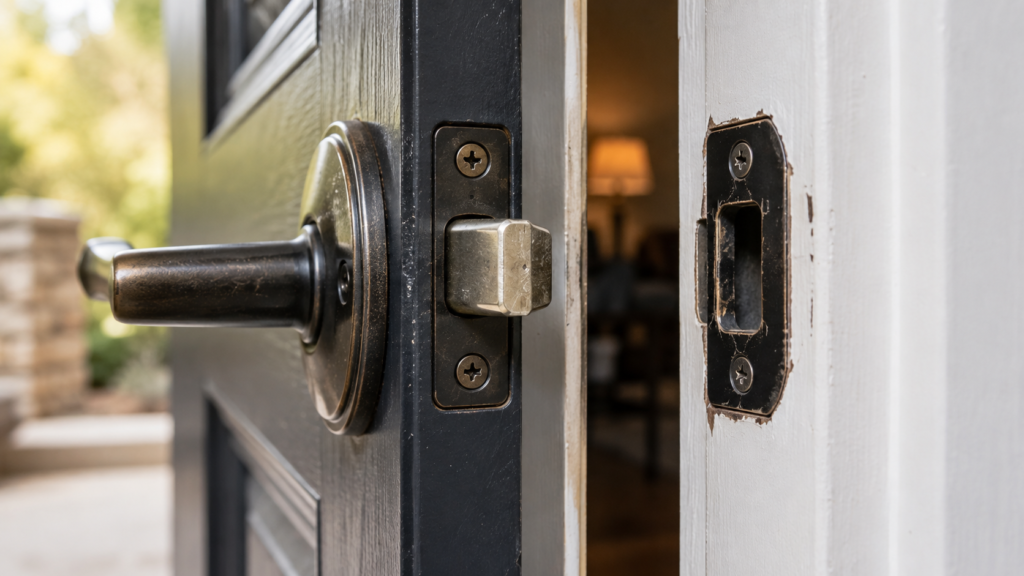
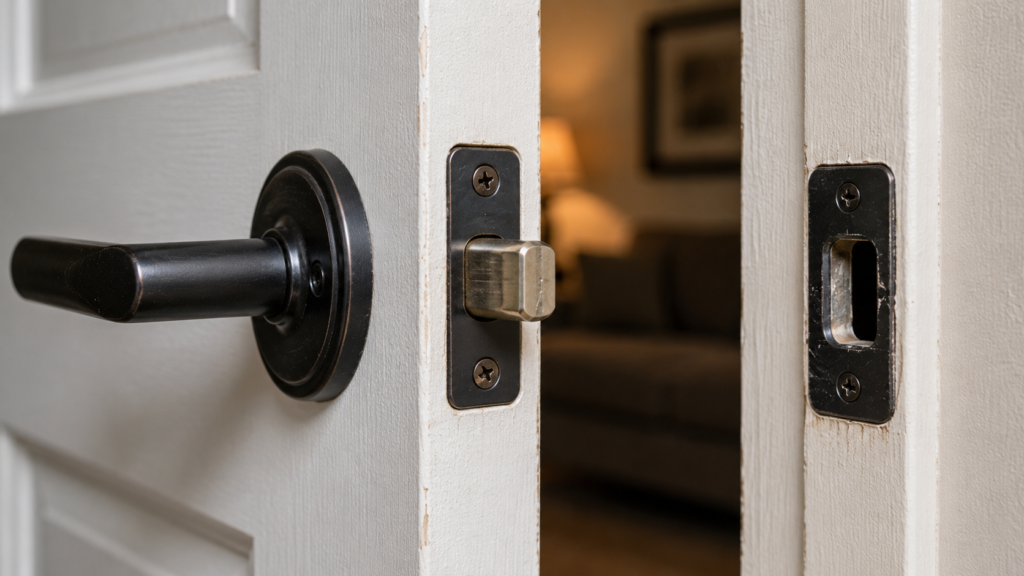
The latch has to enter the opening in the strike plate, which is the metal plate attached to the door frame.
If the door shifts even slightly, the latch may begin rubbing against the edge of that opening instead of moving freely.
You might notice that:
- the door opens more easily when you push or pull on it;
- you have to lift the handle slightly;
- the door needs extra pressure to close;
- the latch rubs against the strike plate; or
- the problem gradually gets worse.
That’s an important clue because the latch itself may not actually be the problem.
2. Loose Hinges Can Change the Door’s Alignment
Before replacing a lock, look at the hinges.
Loose hinge screws can allow a door to sag just enough to move the latch out of alignment with the strike plate.
A small amount of movement at the hinge side can create a much more noticeable alignment problem at the latch side.
If the door appears uneven or seems to have dropped slightly, the hinges deserve a closer look.
3. The Latch Mechanism Is Dirty or Sticking
Door hardware contains moving components, and those components can become dirty or difficult to move over time.
Dust, debris, old lubricant, corrosion, and normal wear can all affect the movement of the latch.
Colorado conditions don’t always make things easier either. Exterior doors can be exposed to temperature changes, moisture, snow, dust, and seasonal movement that can affect both the door and its hardware.
If the latch retracts slowly or doesn’t spring back normally, the mechanism may need cleaning, appropriate lubrication, adjustment, or replacement.
4. The Latch or Internal Hardware Is Worn Out
Sometimes the hardware has simply reached the end of its useful life.
A warning sign I pay attention to is a handle that becomes progressively harder to turn or push down.
If the handle has been sticking for months and suddenly stops retracting the latch, there may be an internal mechanical failure.
This is where continuing to force the handle can make things worse.
5. The Strike Plate Is Loose
A loose strike plate can move enough to interfere with the latch.
Look at the metal plate on the door frame and check whether it moves or whether any screws appear loose.
If the plate has shifted, correcting its position may solve the problem without replacing the lock.
6. The Door Itself Has Shifted
Doors and frames aren’t perfectly static.
Buildings settle. Wood expands and contracts. Hinges wear. Exterior doors experience temperature and moisture changes throughout the year.
That’s why a door that worked perfectly before may suddenly begin rubbing or refusing to latch correctly.
When someone tells me, “It only started doing this recently,” that’s a reason for me to inspect the whole door system rather than immediately assuming the lock is defective.
How to Tell Whether It’s the Latch or the Door Alignment
Here’s a simple test I often recommend.
If you’re able to get the door open, operate the handle while the door is open.
Watch the latch.
- Does it retract smoothly?
- Does it spring back out normally?
- Does the handle feel smooth or unusually stiff?
If the latch operates normally while the door is open but becomes difficult when the door is closed, that points more toward an alignment or strike-plate problem.
If the latch still sticks while the door is completely open, the problem is more likely within the latch, handle, or lock hardware itself.
That distinction can save you from replacing perfectly good hardware.

Harry’s Locksmith Tip: If a latch works normally with the door open but sticks when the door closes, don’t immediately buy a new lock. Check the alignment first. The lock may be doing exactly what it’s supposed to do while the door or strike plate is creating the problem.
What Can You Safely Check Yourself?
There are a few basic things homeowners can inspect before calling a locksmith.
Check for Loose Screws
Look at the handle or lever, hinges, and strike plate.
A loose component can sometimes create enough movement to interfere with the latch.
Gently Change the Pressure on the Door
While operating the handle normally, try gently pushing or pulling the door.
If the latch suddenly releases, that’s useful diagnostic information.
It can indicate that the latch is binding against the strike plate.
Inspect the Latch
If you can open the door, look at the latch itself.
Check for:
- visible damage;
- rust or corrosion;
- dirt or debris;
- unusual looseness;
- a latch that doesn’t spring back; or
- obvious rubbing marks.
Those clues can tell you quite a bit about what’s happening.
Use an Appropriate Lubricant When Appropriate
If the mechanism is simply dry or sticking and isn’t visibly damaged, a lubricant designed for locks or door hardware may help.
But lubricant isn’t a repair for a broken mechanism or badly misaligned door.
If you’re repeatedly lubricating the same latch just to make the door work, there’s probably another problem that needs to be addressed.
What I Don’t Recommend Doing
Don’t immediately start prying, drilling, hammering, or aggressively forcing the door.
I know it’s tempting when you’re locked out of a room or can’t get an exterior door open.
But I’ve seen situations where a relatively straightforward latch problem became a much more expensive repair because the door, frame, finish, or surrounding hardware was damaged while someone tried to force it open.
The goal isn’t simply:
“How do I get this door open?”
The better question is:
“How do I get this door open without creating additional damage?”
That’s a very different approach.
If you’re completely locked out of your home, the safest solution may be different from troubleshooting a latch while you still have access to both sides of the door.
What About the Credit Card Trick?
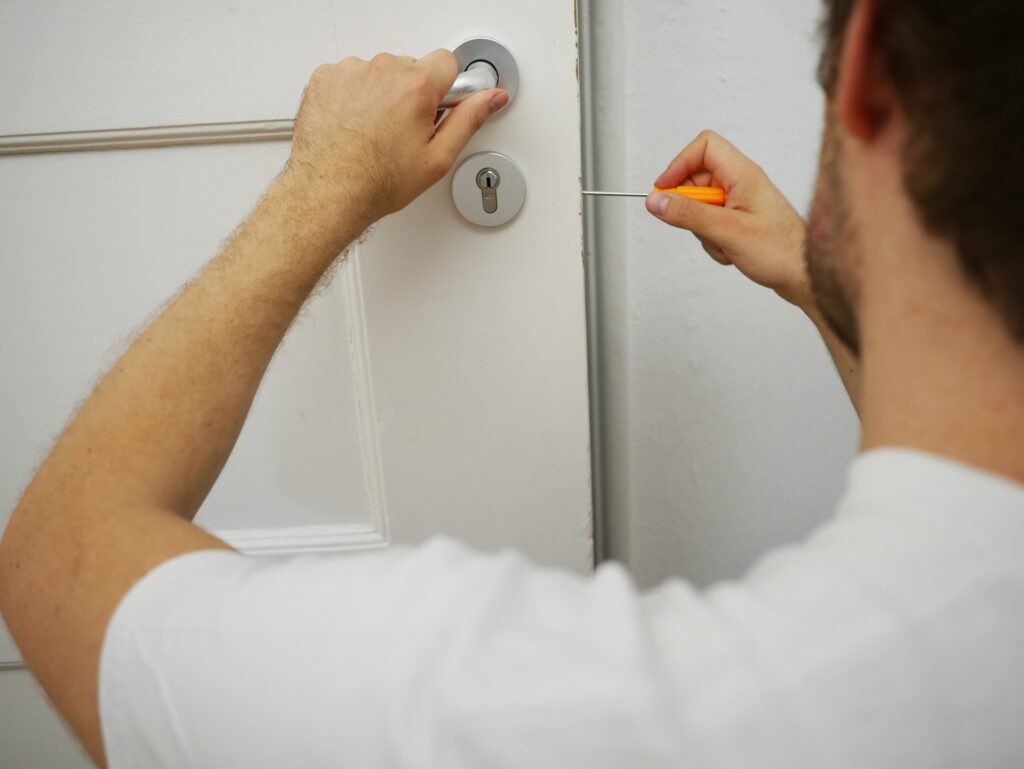
People often ask whether they can slide a credit card between the door and frame to release a latch.
You may have seen this demonstrated online, but I don’t recommend treating it as a universal solution.
Door construction, latch design, strike plates, weather stripping, and security hardware vary considerably. You can damage the card, weather stripping, surrounding finish, or hardware, and the technique isn’t appropriate for many lock configurations.
More importantly, if your own door suddenly won’t open, figuring out why the latch failed is usually more valuable than repeatedly finding ways around it.
Should You Repair or Replace a Stuck Door Latch?
It depends on what failed.
A Repair or Adjustment May Make Sense When:
- the strike plate has shifted;
- hinge screws are loose;
- the door is slightly misaligned;
- the hardware needs proper adjustment; or
- the latch is otherwise in good condition.
Replacement May Make More Sense When:
- the latch mechanism has mechanically failed;
- internal components are worn or broken;
- the handle no longer operates the latch correctly;
- hardware is badly corroded;
- the same problem keeps returning; or
- the lock itself is old and no longer dependable.
I don’t believe in replacing hardware simply because replacement costs more.
The right solution is the one that makes sense for the actual door.
If replacement becomes necessary, our guide comparing Schlage vs. Kwikset smart locks also explains some of the differences I consider when homeowners ask about choosing new lock hardware.
Harry’s Locksmith Tip: Don’t Ignore the Early Warning Signs
A door latch will often give you clues before it completely fails.
Pay attention if:
- the handle suddenly feels different;
- you need more pressure than before;
- the latch retracts slowly;
- the door has to be lifted, pushed, or pulled to close;
- you hear scraping against the strike plate;
- the handle sticks; or
- the door works normally some days and poorly on others.
Those are good reasons to inspect the hardware before you’re standing on the wrong side of a door that won’t open.
Why Denver Doors Can Develop Alignment Problems
Colorado’s environment can be tough on exterior doors.
Denver experiences significant seasonal temperature changes, and exterior doors can also be exposed to snow, moisture, dry conditions, and strong sunlight depending on their location.
That doesn’t mean every stuck latch is caused by weather.
But when diagnosing an exterior door, I look beyond the lock itself.
The condition of the door, frame, hinges, strike plate, latch, and hardware all matter.
A lock is only one part of the door system.
When Should You Call a Locksmith?
Consider calling a professional if:
- the door won’t open without significant force;
- the latch is completely frozen;
- the handle turns but doesn’t retract the latch;
- internal hardware appears broken;
- the lock itself is connected to the problem;
- you’re dealing with an exterior security door;
- you’ve already tried basic adjustments and the problem keeps returning; or
- you’re concerned that continuing could damage the door or frame.
This is especially important with an exterior door because getting the door open isn’t the end of the job.
It still needs to close, latch, and secure properly afterward.
Denver-area homeowners can learn more about our residential locksmith services, including lock repair, lock replacement, rekeying, smart-lock installation, and door-hardware assistance.
For businesses dealing with failing latches, commercial doors, exit hardware, or access issues, see our commercial locksmith services.
Stuck Door Latch in Denver? Goodfellow Locksmith Can Help
If you’re in Denver or one of our surrounding service areas and your door latch is stuck, Goodfellow Locksmith can inspect the door and determine what’s actually causing the problem.
We work with residential and commercial doors, locks, latches, and specialty locking hardware throughout the Denver metro area.
When I diagnose a stuck latch, I’m not looking only at the latch.
I look at the entire system:
Door → Hinges → Alignment → Strike Plate → Latch → Handle/Lever → Lock Hardware
Any one of those components can contribute to the problem.
That’s how you avoid replacing parts unnecessarily.
Need Help With a Stuck Door or Lock?
Talk directly with Goodfellow Locksmith about the problem you’re experiencing and we’ll help determine the appropriate next step.
Frequently Asked Questions About Stuck Door Latches
Why is my door latch stuck inside the door?
Common causes include a worn or damaged latch mechanism, door misalignment, loose hinges, a shifted strike plate, debris or corrosion, or failure inside the handle or lock hardware.
Why does my door latch work when the door is open but not when it’s closed?
That’s often a sign of an alignment problem. The latch may be working correctly but binding against the strike plate when the door closes.
Can I lubricate a stuck door latch?
If the latch is dry or sticking and isn’t mechanically damaged, an appropriate lubricant designed for lock or door hardware may help. If the problem keeps returning, however, lubrication may only be masking the underlying issue.
Why do I have to push my door for the latch to open?
The latch may be pressing against the strike plate. Door sag, loose hinges, or alignment changes can cause this.
Should I replace the entire lock if the latch is broken?
Not necessarily. Depending on the hardware, the latch or another component may be replaceable without replacing everything. The condition and design of the existing lock should be evaluated first.
Can a locksmith open a door with a broken latch?
In many situations, yes. The appropriate method depends on the type of door, lock, latch, and what has failed. A professional should focus on gaining access while minimizing unnecessary damage.
Why does my door latch keep getting stuck?
A recurring problem usually means there’s an underlying cause that hasn’t been corrected. Alignment, hinges, strike-plate position, worn hardware, or the latch mechanism itself should be inspected.
Can cold weather cause a door latch to stick?
Temperature and moisture changes can affect doors and frames, particularly exterior doors. If the door shifts slightly, the latch may no longer align correctly with the strike plate.
The Bottom Line
If your door latch is stuck, don’t assume the entire lock needs to be replaced—and don’t immediately force the door.
Start by determining whether the problem is coming from the latch itself or the way the door is sitting in the frame.
A loose hinge or misaligned strike plate can sometimes create symptoms that look like a broken lock.
And if the mechanism really has failed, dealing with it before additional damage occurs can make the repair much easier.
After more than 15 years working hands-on with locks and door hardware, that’s one principle I continue to follow:
Diagnose the door first. Replace only what actually needs replacing.
About Harry
Harry is the locksmith behind Goodfellow Locksmith Denver, with more than 15 years of hands-on experience working with residential, commercial, automotive, and specialty lock systems throughout the Denver metro area.
His approach is straightforward: identify what’s actually causing the problem and recommend the hardware or service that makes sense for the door—not simply the most expensive option.
Need help with a door, latch, or lock problem? Contact Goodfellow Locksmith Denver or call (720) 313-7854.