
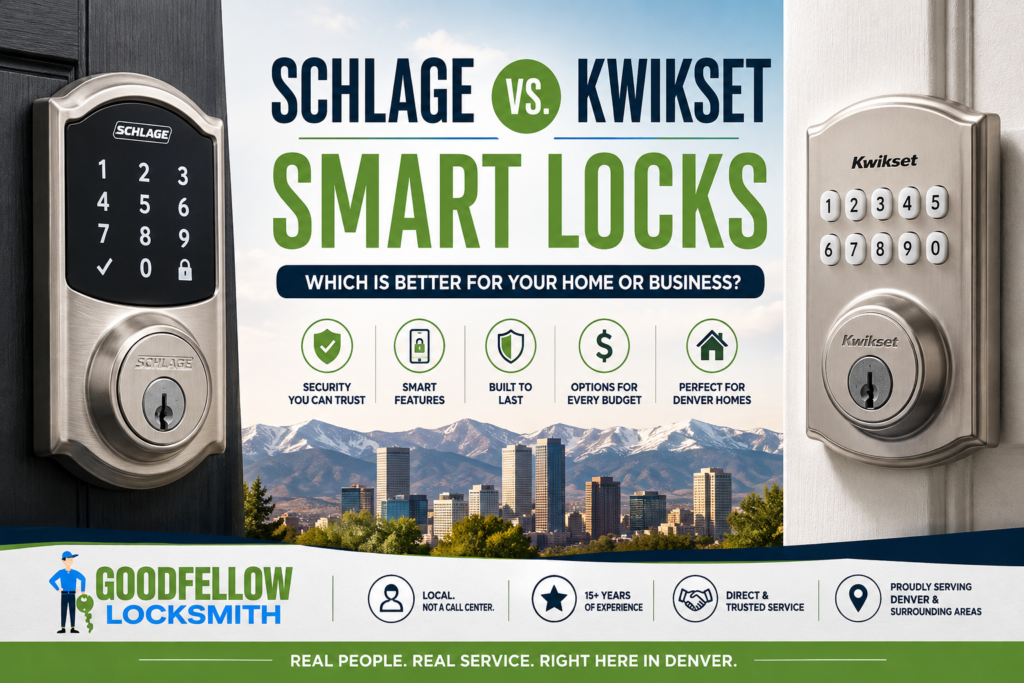
Schlage vs. Kwikset Smart Locks: A Denver Locksmith’s Guide to Choosing the Right Lock
By Harry | Goodfellow Locksmith Denver | 15+ Years of Hands-On Locksmith Experience
If you’re comparing Schlage vs. Kwikset smart locks, you’ve probably already discovered that there isn’t one lock that’s automatically best for every door.
That’s something I explain to customers regularly.
After more than 15 years working hands-on with locks and door hardware, I’ve learned that choosing a lock shouldn’t start with the logo on the box. It should start with the door, how the property is used, who needs access, what level of security you’re looking for, and how much convenience you actually need.
Both Schlage and Kwikset make products that can work well. But I don’t necessarily recommend the same lock for a homeowner, rental property, office or high-use commercial door.
Here’s how I look at the decision.
Harry’s Quick Take: Schlage or Kwikset?
When customers ask me whether I prefer Schlage or Kwikset, I personally lean toward Schlage.
After more than 15 years working with locks and door hardware, Schlage is usually my preference when security is the main priority. Schlage has a strong reputation for security, and I like the brand for homeowners who want a solid, dependable lock on an exterior door.
That doesn’t mean Kwikset is a bad choice. Kwikset makes good locks too, and one of its advantages is that the brand offers more budget-friendly options. For some homeowners, that makes Kwikset a very practical choice.
Ultimately, I tell customers that the right lock depends on what matters most to them—their security needs, budget, preferred features and the specific door where the lock will be installed.
But that’s not the entire story.
The quality of the installation, the condition and alignment of the door, the specific lock model and the way the door is used can matter just as much as the name printed on the lock.
That’s why I don’t like recommending a lock based solely on brand.
My quick comparison
| If your priority is… | My starting point |
|---|---|
| Strong everyday residential security | Schlage |
| Durable hardware | Schlage |
| Simple keyless access | Either — depends on model |
| Budget-conscious upgrade | Kwikset may be worth considering |
| Rental/property access | Depends on access needs |
| Commercial application | Evaluate the actual door and usage first |
| Smart-home integration | Compare the specific models, not just brands |
Now let’s look at why.
Schlage Smart Locks: Where They Make Sense
Schlage is one of the brands I commonly consider when someone wants a combination of physical security, durability and electronic access.
For many Denver homeowners, that’s a very good combination.
Depending on the model, Schlage offers keypad entry, app control, integrations with smart-home platforms and different styles and finishes.
But the feature list isn’t what matters most to me.
What I like about Schlage
One of the reasons I tend to like Schlage is the company’s focus on the lock itself, not only the smart features surrounding it.
A smart lock still has one fundamental job:
Secure the door.
Wi-Fi connectivity, access codes and apps are useful, but I don’t recommend choosing a lock simply because its app has more features.
For an exterior residential door where security and durability are the priorities, Schlage is frequently one of the first brands I would consider.
Where Schlage may not be the best fit
The tradeoff is usually price.
Depending on the model and features, Schlage smart locks can cost more than some alternatives.
And paying more isn’t automatically worthwhile if you’re installing the lock on a low-use interior application or you don’t need the additional features.
That’s why I prefer matching the hardware to the actual application instead of automatically recommending the most expensive lock.
Kwikset Smart Locks: Where They Make Sense
Kwikset is another extremely common brand, and there are situations where it makes plenty of sense.
Kwikset offers electronic deadbolts, keypad locks, keyless options and smart locks with several connectivity choices depending on the model.
For someone looking primarily for convenient access at a reasonable price, certain Kwikset models can be worth considering.
What I like about Kwikset
The biggest appeal is often accessibility and convenience.
For homeowners who want to move away from traditional keys without buying a premium lock system, Kwikset provides plenty of choices.
Their product lineup also makes it relatively easy to find different finishes and configurations that match existing residential hardware.
Where I’d think more carefully
If the door gets heavy daily use or physical durability is the highest priority, I would compare the specific Kwikset model against the equivalent Schlage hardware before making the decision.
This is an important distinction:
Don’t compare brands. Compare the actual locks.
A premium product from one manufacturer shouldn’t necessarily be compared with an entry-level product from another.
What I Look at Before Recommending Either Brand
When someone asks me, “Harry, which lock should I buy?”, I want to know a few things first.
1. What kind of door is it?
A front entrance to your home has different requirements than an interior office, rental property, storefront or secondary entrance.
2. How frequently is the door used?
A lock that gets operated dozens or hundreds of times a day has different demands than a residential side door that’s opened a few times.
3. Who needs access?
Do you need access for:
- Family members?
- Employees?
- Contractors?
- Cleaners?
- Guests?
- Short-term users?
If multiple people need temporary or changing access, electronic access codes may be much more valuable than simply having a traditional keyed deadbolt.
4. What happens if the electronics fail?
This is something people sometimes overlook when shopping for smart locks.
Think about battery replacement, backup entry methods and what you’ll do if the electronic portion of the lock isn’t functioning when you need to get inside.
5. Does the door close correctly?
This one is huge.
You can purchase an excellent smart lock and still have a terrible experience if the door or strike isn’t aligned properly.
A deadbolt shouldn’t have to fight the door every time it locks.
Before blaming the smart lock, I look at the entire door system.
Harry’s Recommendation for Denver Homeowners
For a typical Denver homeowner replacing the main deadbolt on an exterior entrance, Schlage would generally be my starting point if security and durability are the primary goals.
That doesn’t mean everyone needs one.
If you’re mainly interested in convenient keypad access and want to keep the project more budget-conscious, I would also consider an appropriate Kwikset model.
The important thing is buying the right lock for your particular door, rather than buying whatever smart lock happens to have the best advertisement or biggest feature list.
What About Denver’s Weather?
Colorado conditions are another reason I don’t like treating smart locks exactly like indoor electronics.
Exterior hardware can be exposed to large temperature swings, intense sun, snow, moisture and freezing conditions.
When choosing an electronic lock for an exterior Denver-area door, I recommend paying attention to the manufacturer’s specified operating conditions for the exact model you’re considering.
And regardless of brand, proper installation matters.
If a door is difficult to latch or the deadbolt doesn’t move smoothly before installing a smart lock, adding a motorized lock isn’t going to magically correct the underlying problem.
Fix the door or alignment problem first.
Schlage vs. Kwikset for Rental Properties
Rental properties require a slightly different way of thinking.
Convenient code management can be extremely useful when access changes regularly.
But don’t choose a rental-property lock solely because you can change the code from your phone.
I would consider:
Access management → battery reliability → physical hardware → backup access → ease of servicing.
The best system is one that still makes sense when something goes wrong.
What About Businesses?
For a business, I become even more cautious about recommending a residential smart lock just because it’s popular online.
Commercial doors can experience significantly different traffic and security requirements.
The hardware needs to match the application.
For a lightly used private office, one solution might make sense. For a heavily used exterior business entrance, I may recommend something completely different.
If you’re choosing hardware for a Denver business, it’s worth evaluating the door and its actual use before purchasing the lock.
Smart Lock Mistakes I Recommend Avoiding
Over the years, I’ve seen enough lock and door problems to know that the lock itself isn’t always the problem.
Some mistakes I recommend avoiding are:
- Buying based entirely on online ratings.
- Choosing features before considering physical security.
- Installing a smart deadbolt on a poorly aligned door.
- Ignoring battery and backup-entry options.
- Assuming every smart lock works with every smart-home ecosystem.
- Buying residential-grade hardware for an application that really needs something more durable.
- Replacing a perfectly good lock when rekeying or repairing it would solve the actual problem.
That last one is important.
My goal isn’t to sell someone the most expensive hardware possible. Sometimes replacement makes sense. Sometimes it doesn’t.
So, Which Would I Put on My Own Door?
If my priority were durability and security on a primary exterior residential entrance, I’d start by looking at Schlage.
If my priority were straightforward electronic access at a more budget-conscious price point, I’d compare the appropriate Kwikset options.
But I would still evaluate the exact model.
That’s the difference between asking:
“Is Schlage better than Kwikset?”
and asking the more useful question:
“Which specific lock is best for this specific door?”
The second question is the one I can actually help you answer.
Ask Harry Before You Buy
Not sure whether the lock you’re considering is appropriate for your door?
You don’t have to buy it first and find out afterward.
Goodfellow Locksmith is a locally operated Denver locksmith service, and when you contact us, you’re speaking directly with Harry — not a national call center, dispatch company or third-party locksmith network.
With 15+ years of hands-on locksmith experience, I can help you determine whether it makes more sense to install, replace, repair or rekey your existing hardware.
Call Goodfellow Locksmith: (720) 313-7854
Or request service through Goodfellow Locksmith’s website.
Frequently Asked Questions
Is Schlage better than Kwikset?
Neither brand is automatically better for every application. For an exterior residential entrance where durability and security are the priorities, I generally start with Schlage. For more budget-conscious electronic access, certain Kwikset models may also be appropriate.
Which smart lock is best for a Denver home?
It depends on the door, desired security level, access requirements, budget and smart-home system. The condition and alignment of the door should also be considered before installing an electronic deadbolt.
Can a locksmith install a smart lock?
Yes. A locksmith can install compatible smart-lock hardware and, importantly, evaluate the door, strike and alignment so the lock operates correctly.
Should I replace my lock or rekey it?
Not necessarily replace it. If the existing hardware is in good condition and your primary concern is controlling who has a working key, rekeying may be sufficient. Damaged, inappropriate or outdated hardware may warrant replacement.
Can you help me choose a lock before I purchase one?
Yes. That’s actually preferable when you’re uncertain about compatibility or what level of hardware your door needs.
About Harry
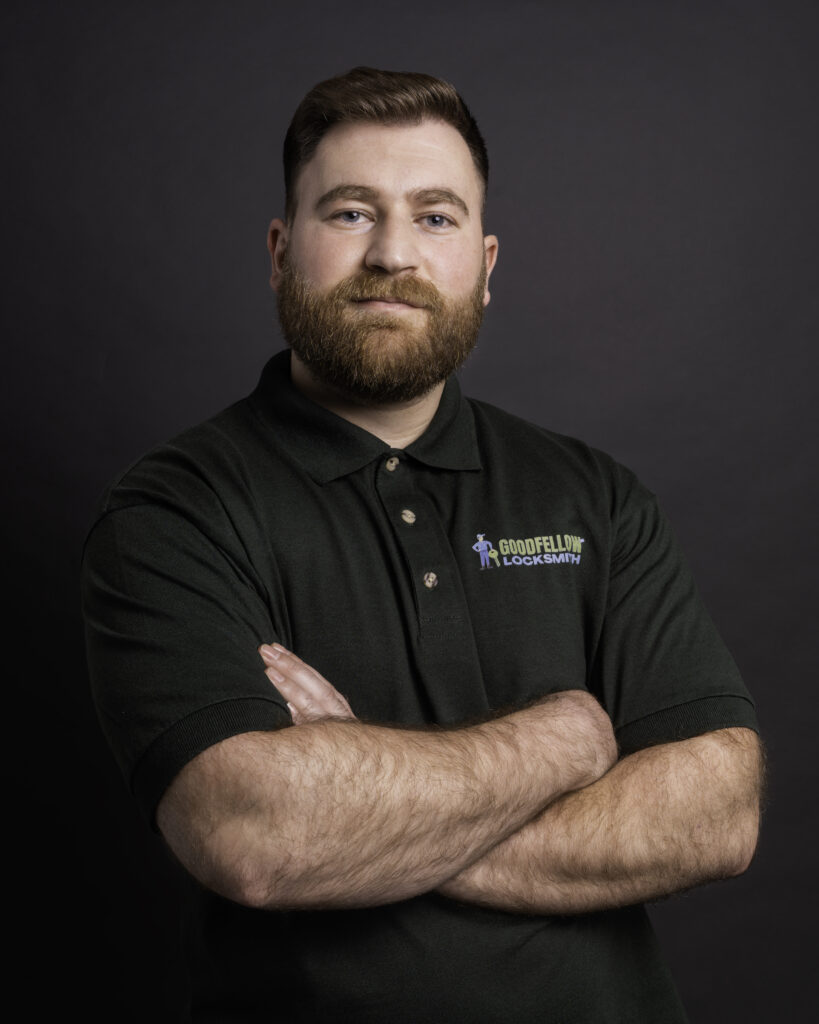
Harry is the locksmith behind Goodfellow Locksmith Denver, with more than 15 years of hands-on experience working with residential, commercial, automotive and specialty lock systems throughout the Denver metro area.
His approach is straightforward: recommend the hardware and service that make sense for the actual door and situation—not simply the most expensive option.